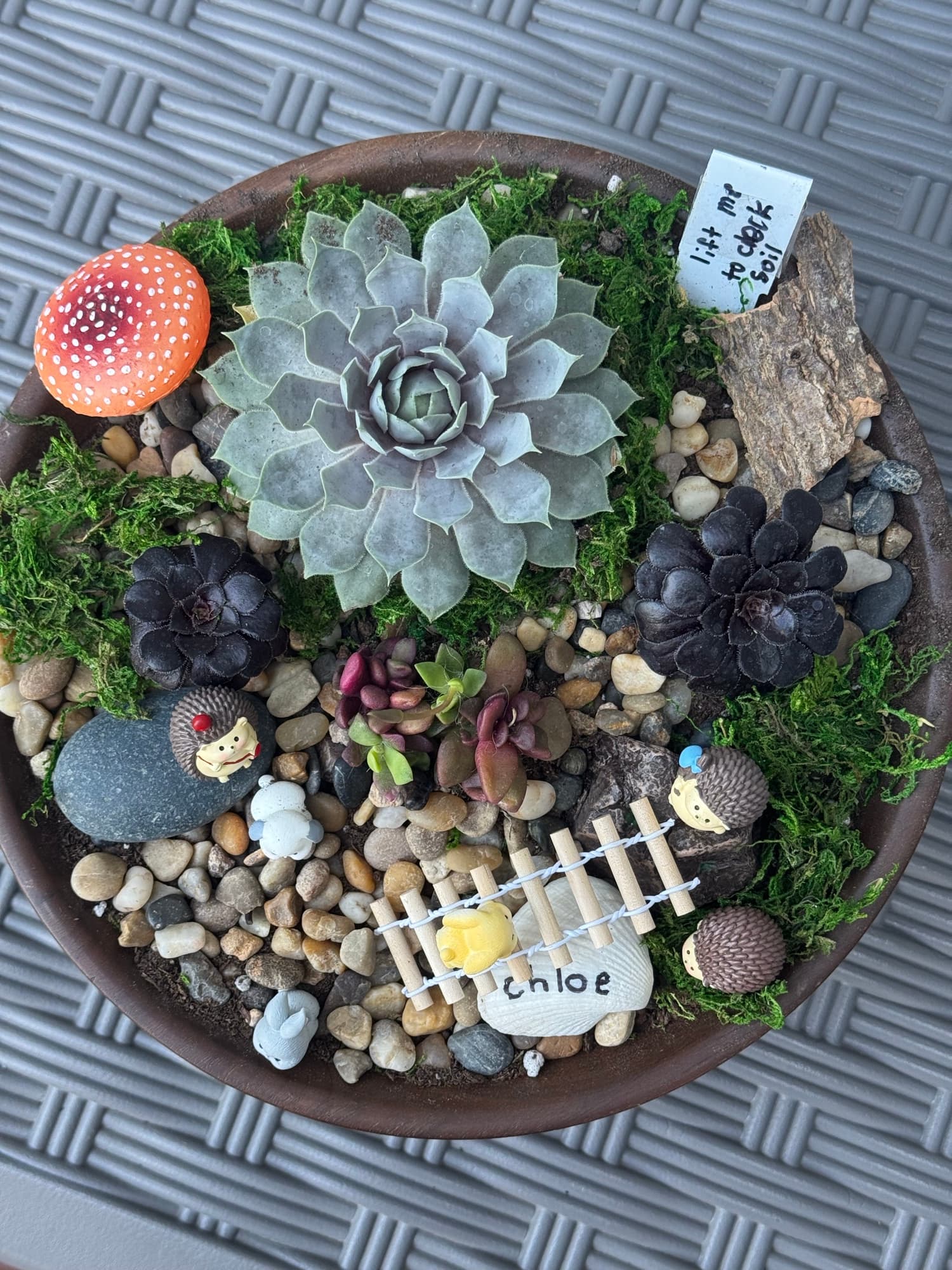
Keeping your little world.
Your card has the three things you need. This is everything else.
Three things, and that’s honestly all.
- 1LightA bright window it can see the sky from. About six hours a day.
- 2WaterSoak it until water runs out of the bottom, then leave it alone until the soil is dry again.
- 3Its nameWritten on your card, so you can say hello to it properly.
Lift the moss to check the soil.
Most succulent advice tells you to push a finger into the soil. That advice is wrong for your world, because the surface is moss and pebbles — a finger only ever finds stone.
So lift a corner of the moss and feel the soil underneath. Dry and crumbly means it is time. Cool and damp means wait — and waiting is almost always the right answer. Check the soil, not the calendar.
“lift me to check soil”
A succulent learned a desert trick.
It holds its breath all through the hot day so the sun can’t steal its water, and breathes at night instead — tucking that night-breath away inside its fat little leaves to make food when the morning comes back.
That is why it forgives you if you forget. A succulent carries its own rainy day inside its leaves.
Which means the danger is almost never forgetting. It is loving it too much — a small drink every few days, faithfully, until the roots never get to dry out. When you are unsure, the answer is wait.
Every pot we make has a hole in the bottom.
If the vessel came without one, we drilled it. That is not a detail — it is the single rule that decides whether a succulent thrives or drowns, so we took it out of your hands entirely.
A pot with no hole is a slow puddle. Yours isn’t one. So water it properly and generously — until it runs out the bottom — then tip out whatever collects in the saucer and leave it be. Keep the hole clear and the pot does the rest.
The soil is gritty and sandy-looking on purpose, too. Roots need to breathe. Ordinary potting soil holds water like a sponge; a gritty mix lets it rush through and lets air back in fast. Between the hole and the grit, half the work is already done for you.
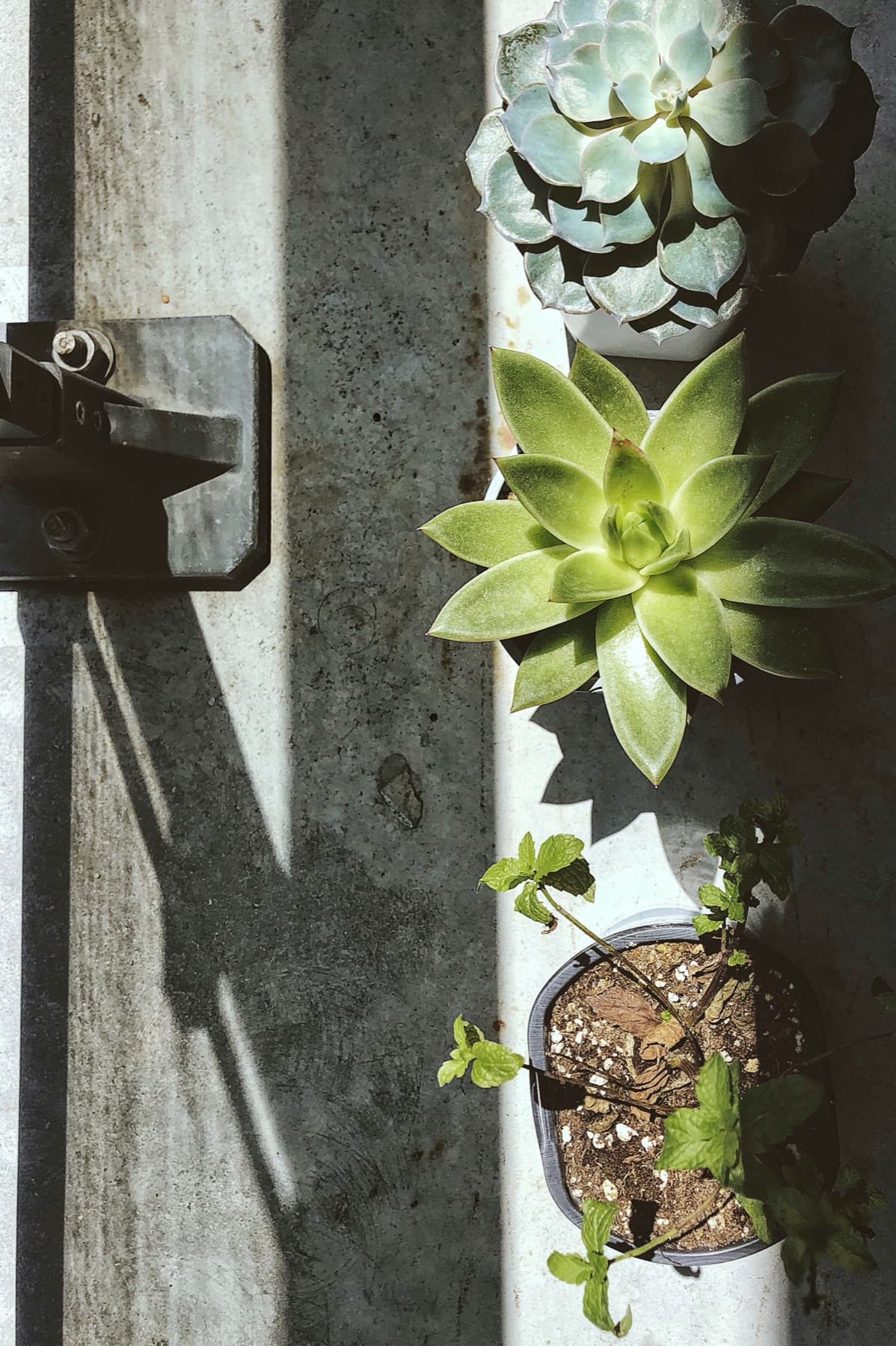
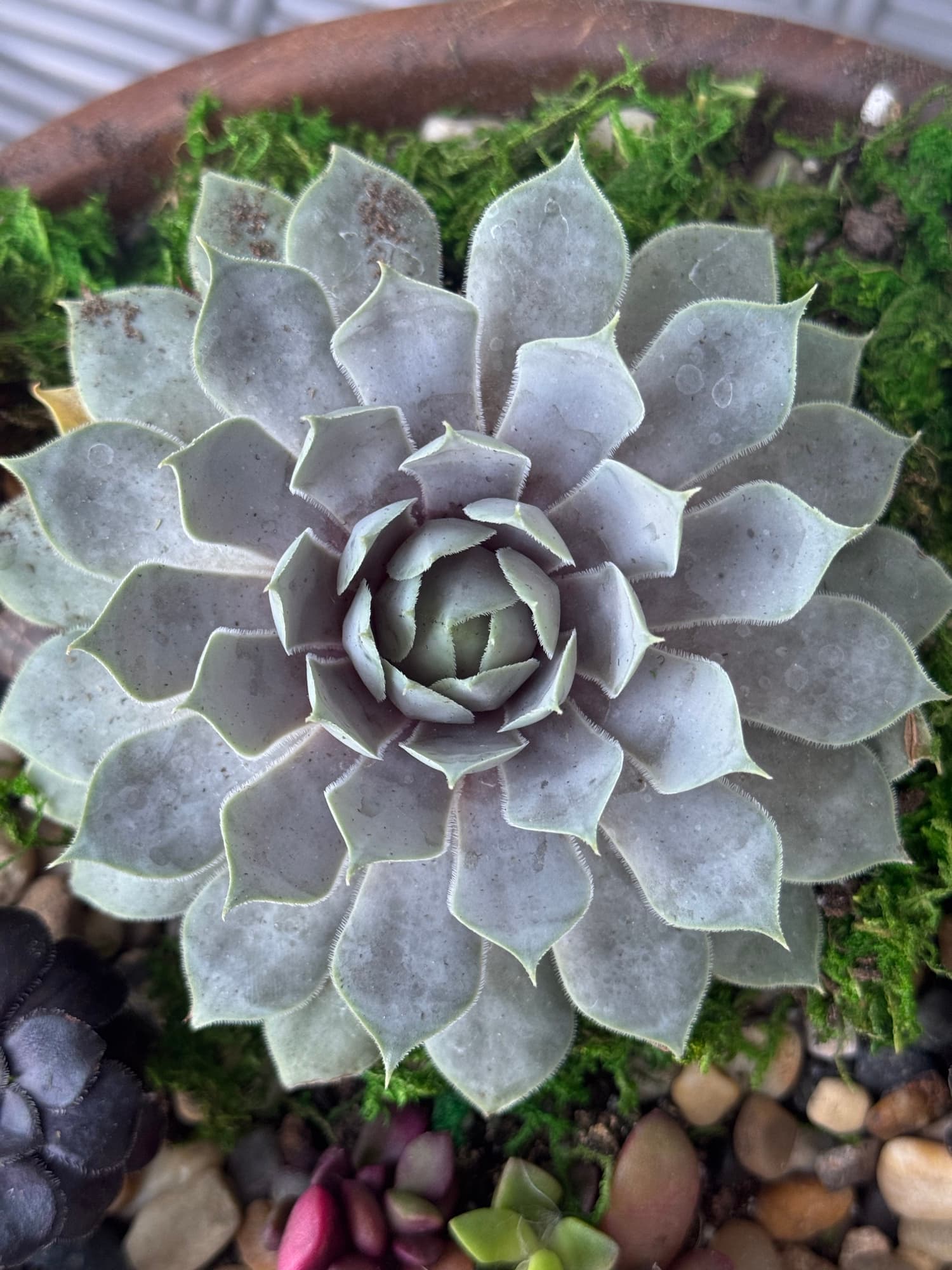
Give it the brightest window you have.
About six hours of bright light. A south or west windowsill is the gold spot. If it doesn’t get enough it will tell you — and this is the one to catch early.
It starts reaching. The stem goes tall and pale, the leaves space out, and that tight spiral opens up and loses its shape. Gardeners call it the stretch. It isn’t sick — it’s looking for the sun.
Here is the honest part: a stretched plant doesn’t shrink back. Move it somewhere brighter and everything it grows from then on comes back compact, but the stretched part stays. If you want the shape back, cut the rosette off the top and re-root it — which is the same trick that makes new plants.
In winter it’s napping, not dying.
When the days go short and cold most of these plants slow right down. They stop growing, they barely drink, and they can look dull and unbothered for months. That is dormancy, and it is a rest, not a decline.
Watering less in winter isn’t neglect. It’s the care.
Keep it in the brightest spot you have and stretch the gaps out a long way — the soil takes far longer to dry when the plant isn’t drinking. A dormant succulent given summer-sized drinks is a succulent sitting in cold wet soil, and that is where rot begins. Ease off, wait for spring, and it wakes up and grows again.
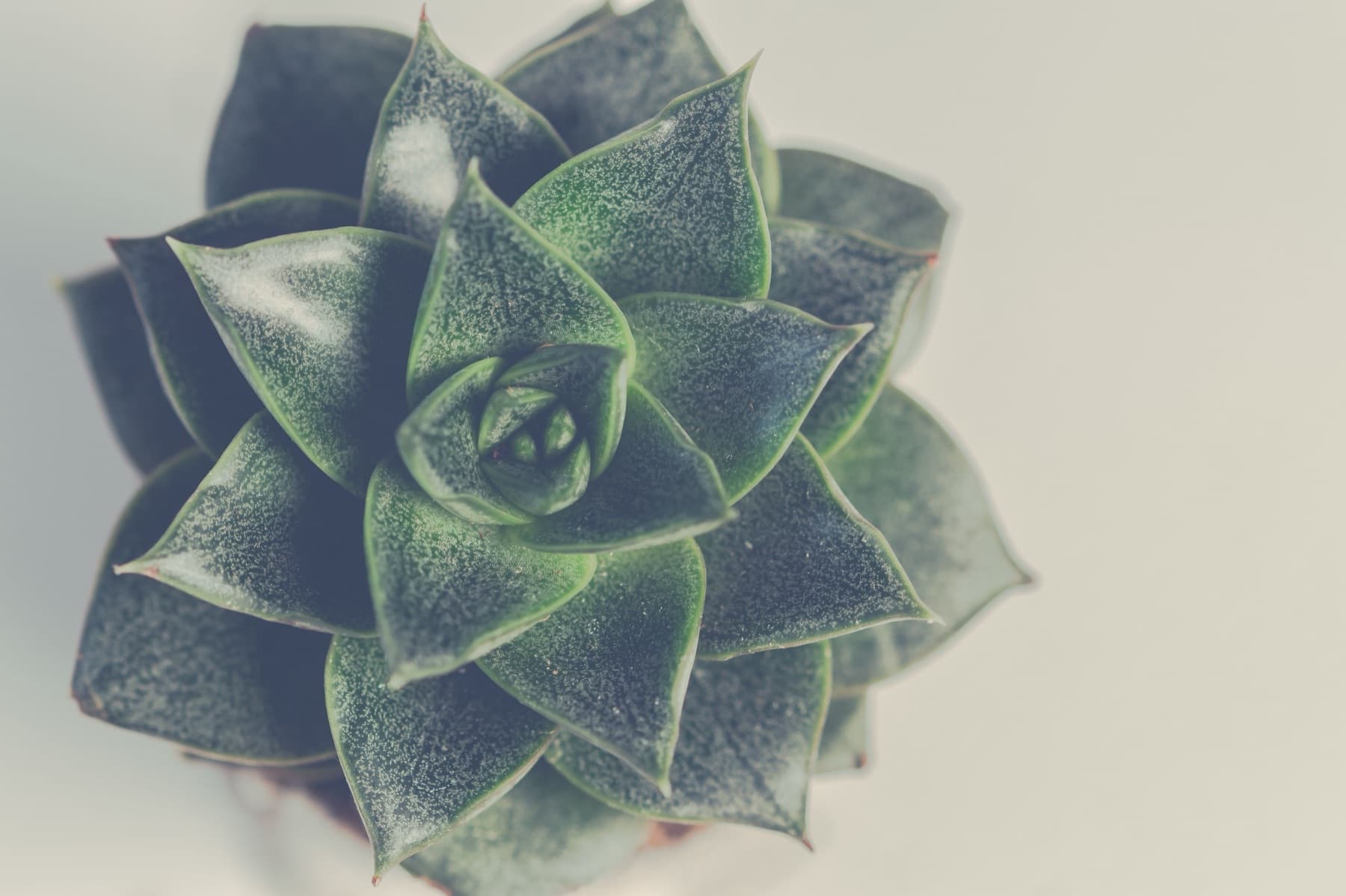
Plant doctor.
A succulent shows you what it needs, once you know what you’re looking at. Nothing on this list means you did badly — it’s a plant with a symptom, and most are fixable.
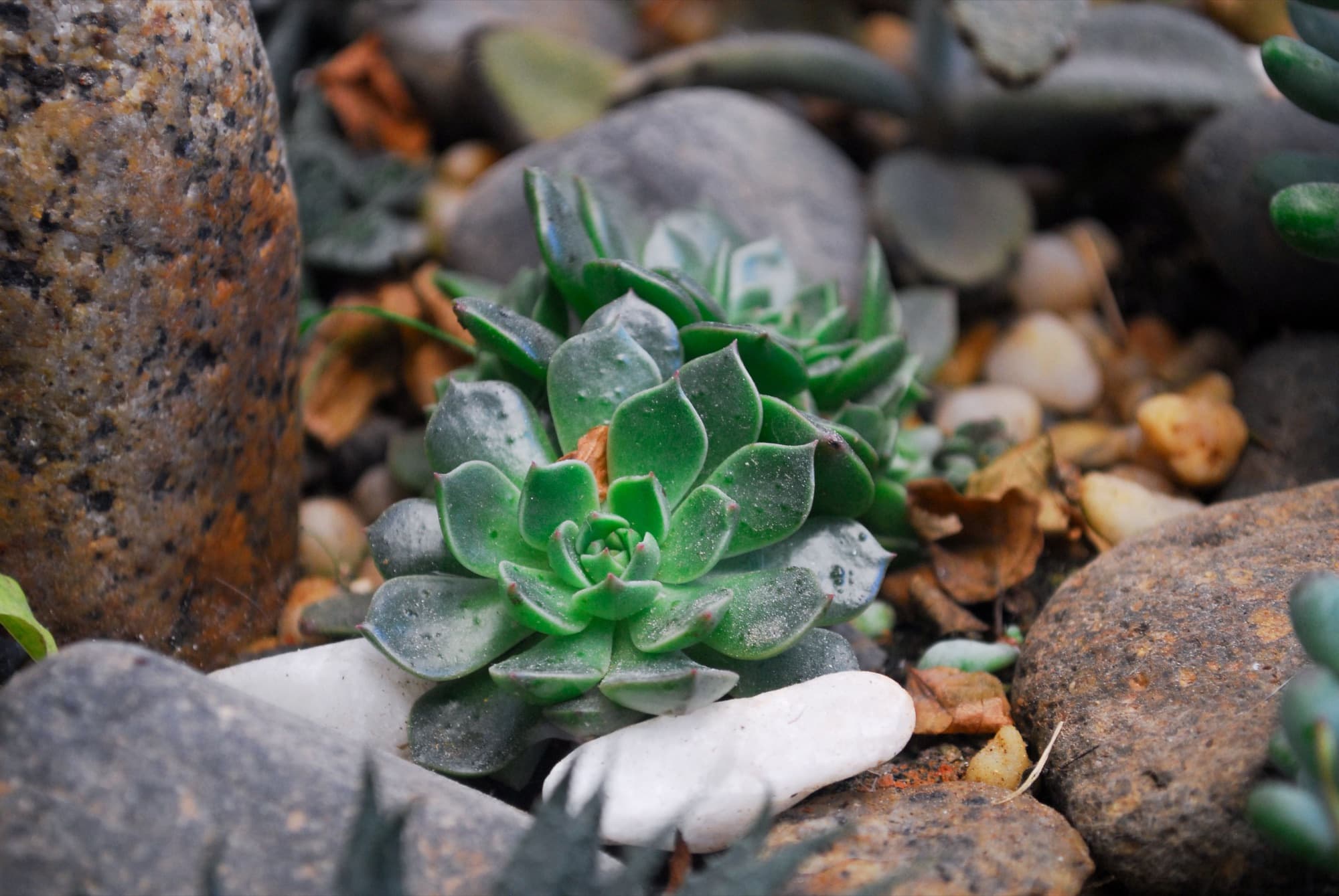
Leaves thin, soft and wrinkly — like a deflated balloon
What it meansThirsty. It has been living off its own stored water and has run low.
What to doGive it a proper soaking. It plumps back up within a day or two — the most satisfying fix there is.
Leaves mushy, squishy, see-through or yellowing — dropping at a touch
What it meansOverwatered. The dangerous one, and it looks confusingly like thirsty at a glance. The difference is mushy versus wrinkly.
What to doStop watering. Move it somewhere bright and airy and let the soil dry all the way out before the next drink.
A black or brown mushy stem at the base, and a bad smell
What it meansRoot rot. The roots have been wet too long. This one does not wait.
What to doAct now. Cut the healthy green top off well above the rot, let the cut dry and callus a few days, then set it on fresh dry gritty soil to re-root. The base is lost; the top is usually saveable.
Growing tall and leggy, pale, leaves spaced far apart
What it meansNot enough light — the stretch.
What to doMove it to your brightest window. New growth comes back tight; the stretched part stays stretched. Behead and re-root if you want the compact shape back.
Pale bleached or brown crispy patches on the window side
What it meansSunburn, usually from being moved into fierce direct sun all at once.
What to doPull it back from the glass and introduce strong sun over a week or two. Scarred patches do not heal, but new growth comes in clean.
Little white fuzzy specks where the leaves meet the stem
What it meansMealybugs — small sap-sucking insects that hide in the tight crevices.
What to doDab each one with a cotton bud dipped in rubbing alcohol. Check again every few days for a fortnight, and keep it away from other plants meanwhile.
And if you can’t work out which it is: let it dry out and put it somewhere brighter. That is the right answer far more often than it isn’t.
On purpose, and on the record.
✦A drainage hole in every pot.
The one rule that decides whether a succulent thrives or drowns.
✦Grown from a leaf, never from the wild.
Every plant is propagated by hand. Nothing is ever taken from nature.
✦A care card in every world.
A living thing never leaves home without instructions for staying alive.
✦Soft plants, safe for small hands.
We design with gentle, spineless succulents — because small hands build every world.
✦The story is the maker’s own words.
Each world’s tale is told by the child who made it, in her words.
✦Honest pictures.
Only a real creation is ever shown as ours.
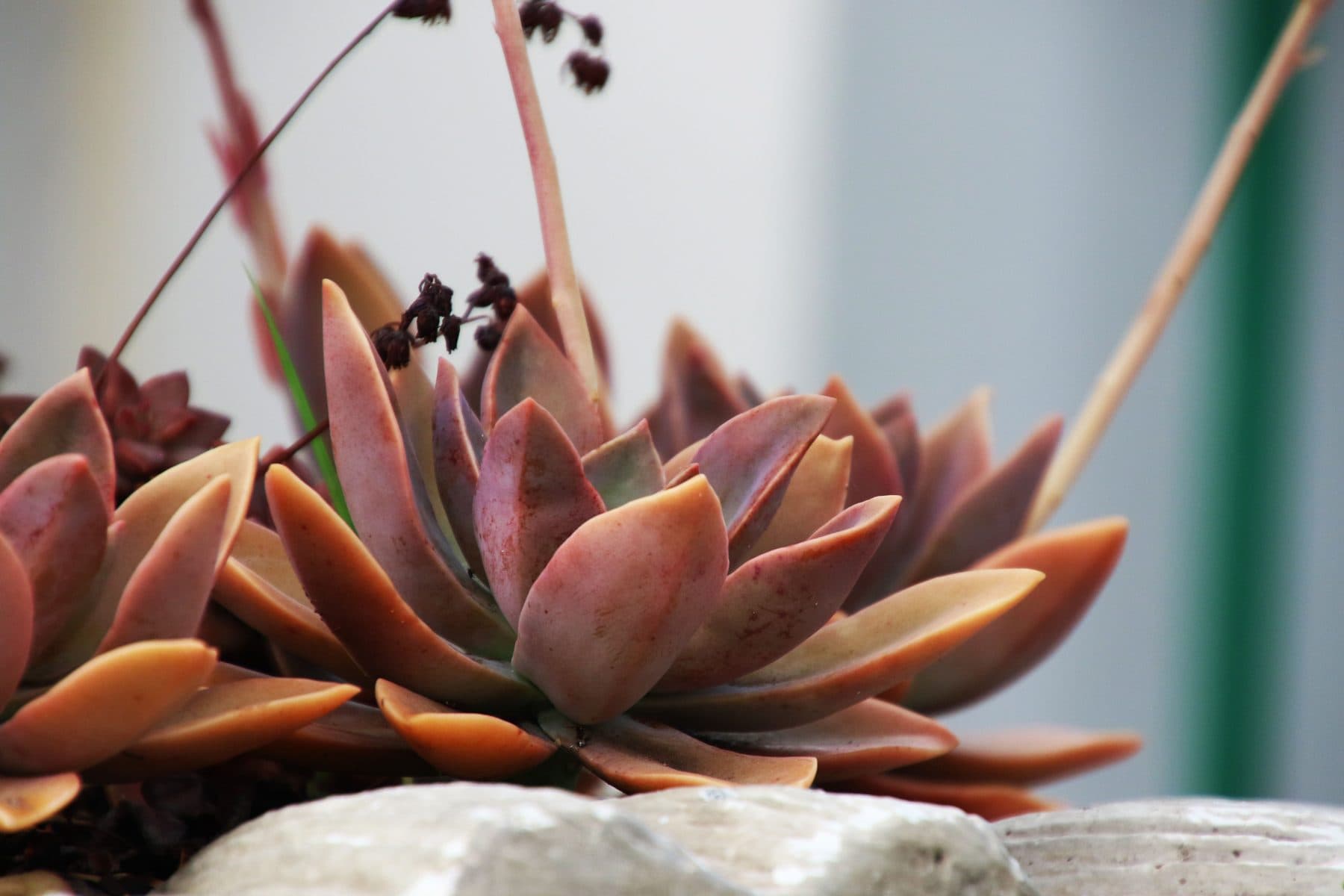
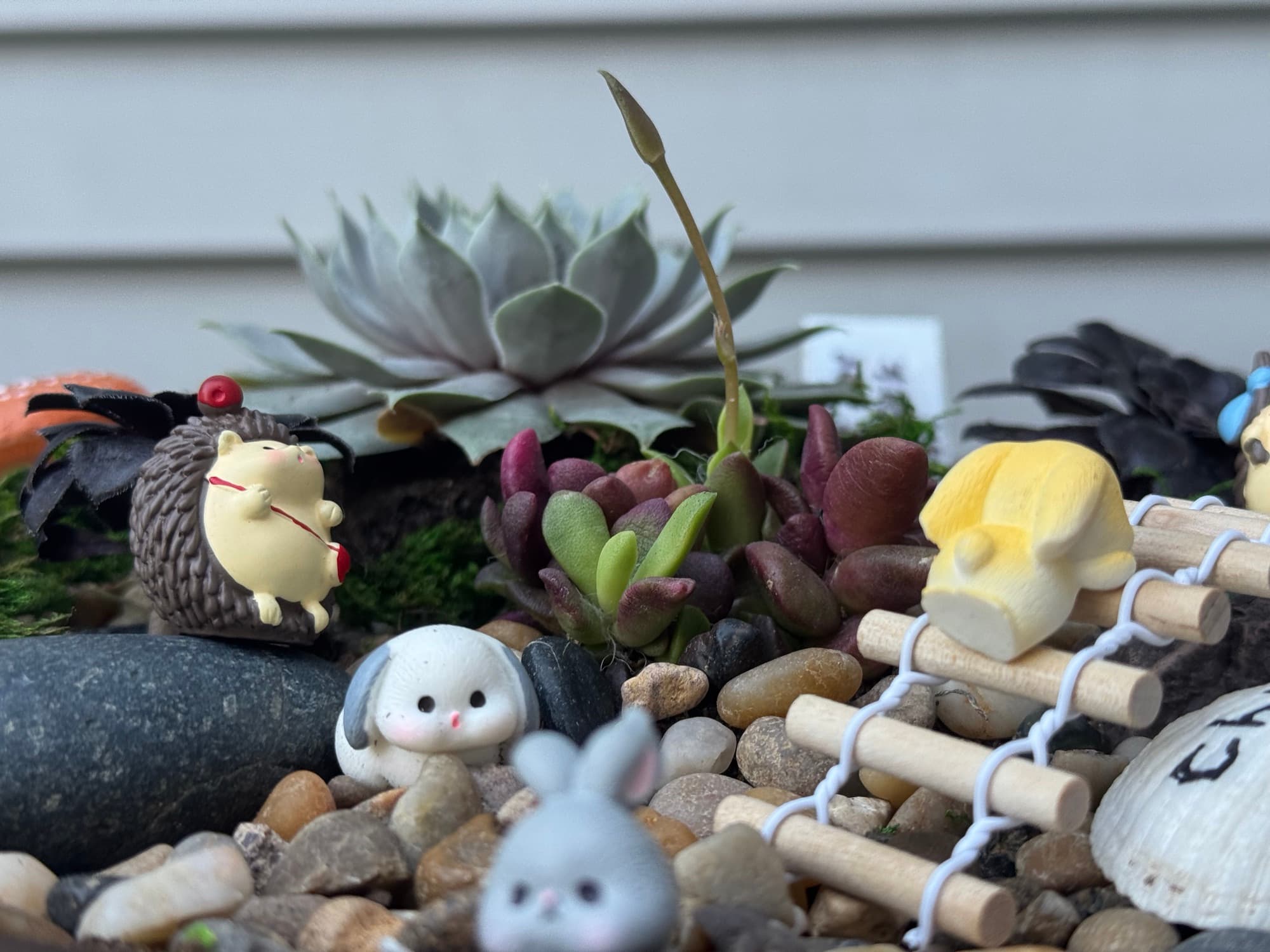
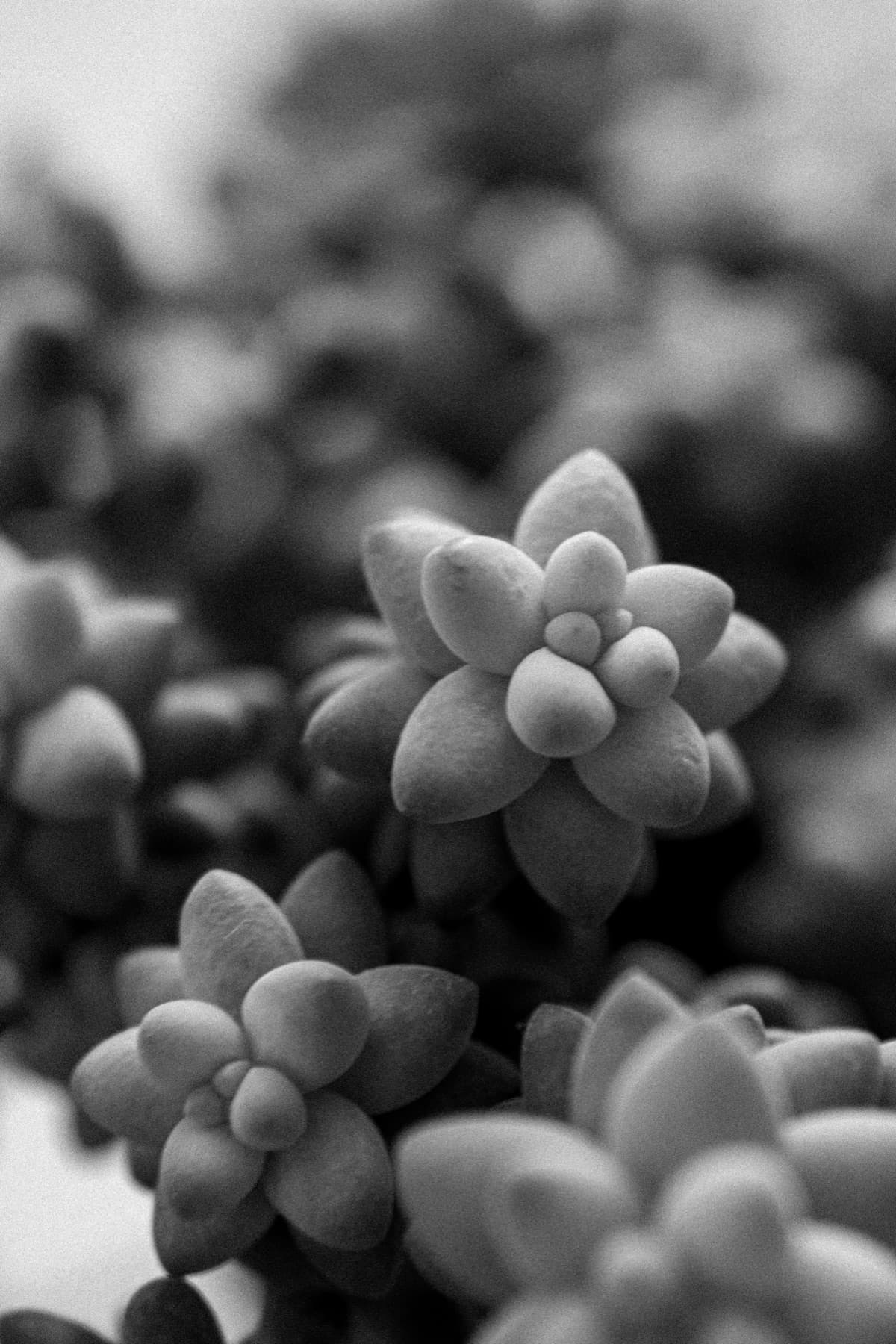
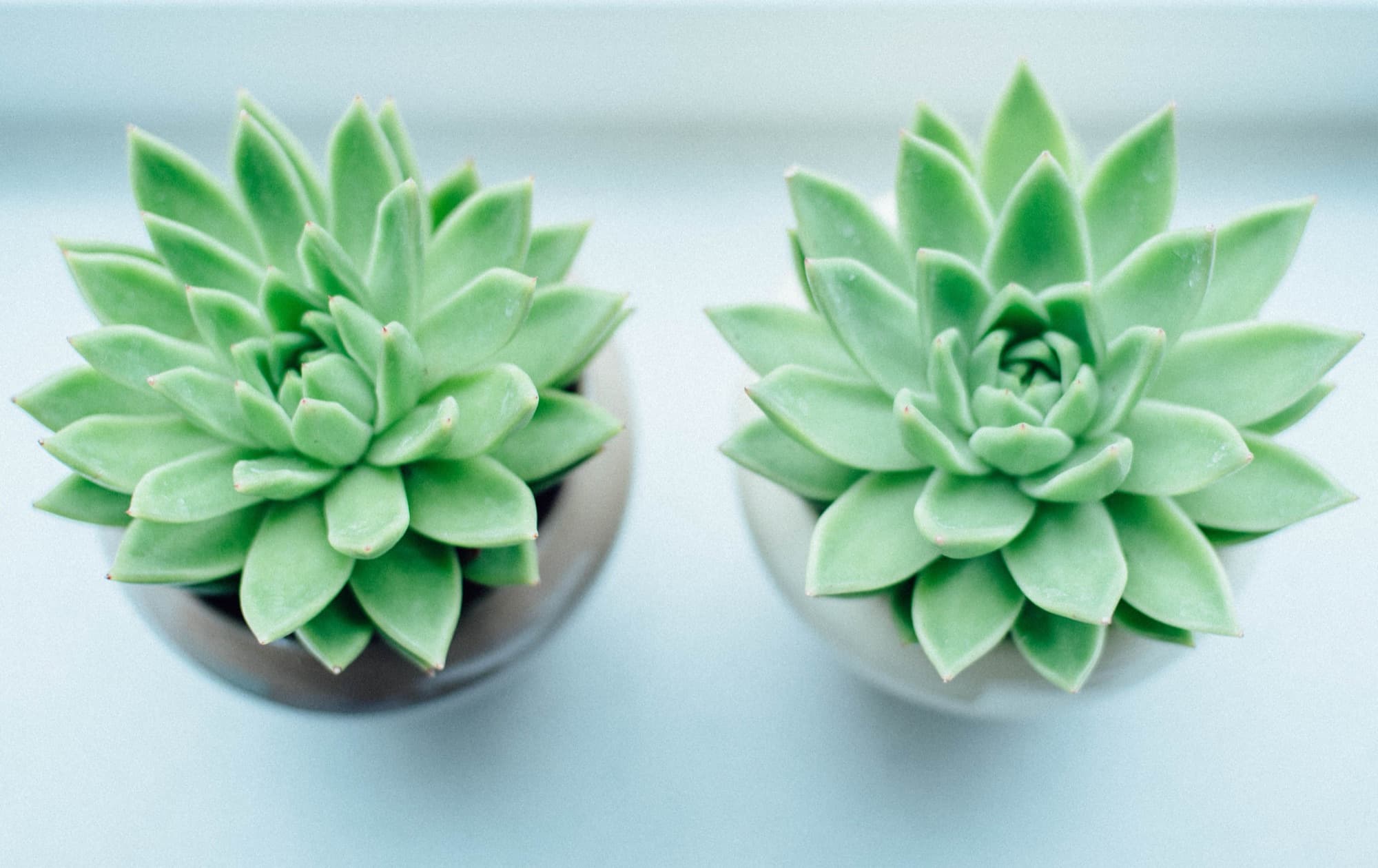
About the pictures on this page: the world at the top, the little scene, and the close-up grey rosette are ours— photographed the night they were made. Every other photograph here is a stock one, chosen for mood, and each will be swapped for one of the sisters’ own as they are made and photographed. We would rather tell you than let you wonder.
Your world was made by hand, by a child.
Someone chose those plants, arranged them into a little scene, decided what was happening in it, and gave it a name. The tale on your card is hers. Every plant in it was grown from a single leaf on a windowsill — never taken from the wild.
Keep it alive and you keep the story alive too. That’s the whole idea.
Something not covered here? hello@succulentworlds.com — a grown-up reads our mail.
Alina · Elizabeth · Gwendolyn